Posts

Words that sound the same
Image
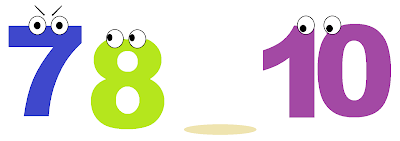
Homophones are words that sound the same, even though they sometimes have different spellings. Both flower and flour are pronounced /fla ʊə r /. Sea and see both sound /si:/. I and eye don’t have a single letter in common, but we pronounce them in the same way exactly: /a ɪ /. And the list is not short – one/won , no/know , our/hour , son/sun , and blue/blew are just some everyday examples.   It seems that English spelling doesn’t always help us predict pronunciation. This means we should listen to words when we look them up, to make sure we learn how to say them properly. Fortunately, online dictionaries now make this a lot easier. It is also important to be careful when writing, as homophones may be the cause of spelling mistakes – there , their , and they’re might sound the same, but they have different meanings. On the bright side, homophones allow us to play with language. We make plenty of puns and jokes based on wordplay: ‘Why is six afraid of seven?...

When nouns become verbs

Image
Many English words can be both nouns and verbs, due to a word-building process known as conversion . We can swim or have a swim , we can look at something or have a look , and we use a phone to phone somebody. And this is all done with no addition of prefixes or suffixes. In some languages, verbs are conjugated – their form changes to express tense or person, for instance. Even in the infinitive, they show characteristic verb endings that make them easy to identify.  Although English verbs may be inflected too, as in ‘Sue texts me every day,’ they often aren’t. As a result, a noun and a verb sometimes look exactly the same, and we have to rely on word order to realise that work is a noun in ‘I have a lot of work,’ and a verb in ‘I work a lot.’   ‘We bottled the wine last week.’ Turning nouns into verbs is a common phenomenon in English, and it can be a bit puzzling at first. But the resulting verbs are usually a very efficient and economical w...

Milk chocolate & cherry tomatoes

Image
  In English we often find two nouns together: milk chocolate , cherry tomato , strawberry jam , grammar book . These structures may be confusing for speakers of some languages where the same information is organised differently. Sometimes they are compound nouns , and sometimes they are collocations , combinations of words that tend to occur together very frequently rather than by chance. The first noun gives information about the second one. A library card , a birthday card and a credit card are all different kinds of cards. Chocolate cake , birthday cake and wedding cake are all types of cakes. So, milk chocolate is chocolate, and cherry tomatoes are tomatoes. milk chocolate (chocolate that contains milk) cherry tomatoes (tomatoes that are as small as cherries)    Sometimes we can find more than two nouns together: milk chocolate biscuits  (Yum!)